
San Jose city leaders are holding a community meeting Thursday evening to discuss new regulations for data centers in the future.
According to the city, there are currently 11 applications for data centers under review.
"Within the last 10 years, we had like Google warehouses coming through here, we had distribution centers," Marcos Espinoza, the president of Alviso in Action, told CBS News Bay Area.
Alviso, a district of roughly 2,000 residents in the northern part of San Jose, has a few large-energy use projects brewing in its backyard.
"This is not just something that can be swept under the rug," Espinoza said.
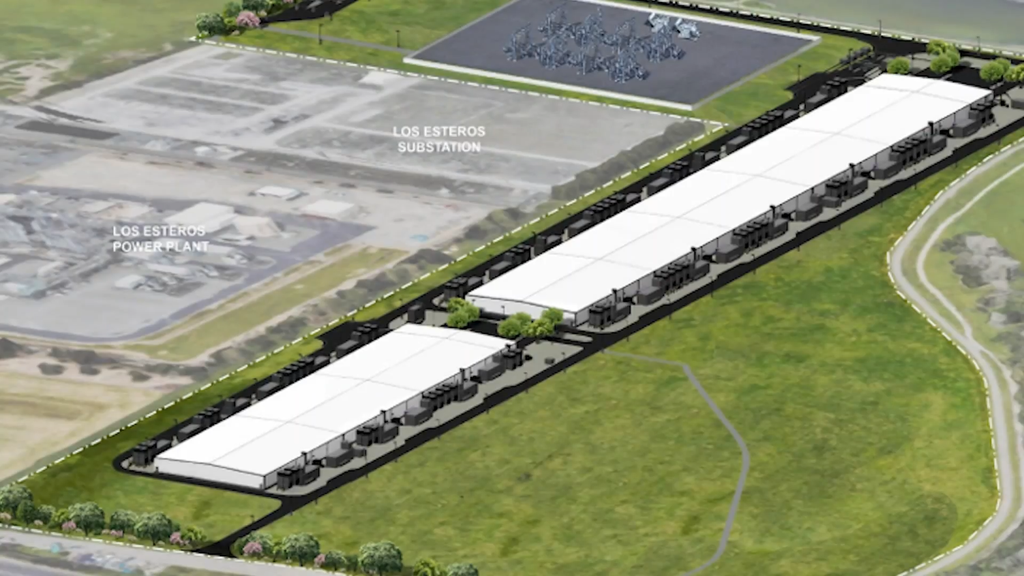
A Microsoft data center is under construction about a mile away from his home.
"Anxious to see once it's built, what impact it will be, that's causing noise pollution, air pollution," he said.
Espinoza has been living in the area for about 20 years. As the head of Alviso in Action, he informs the community of the environmental impacts of projects like these.
"Just the location, it's right next to a river, Coyote Creek," he said. "That river is the one that actually caused the flooding in Alviso back in 1983. So, they say that with the data center is not a flood zone, but it's right next to the river."
He said there are rumors of a data center coming to the intersection of North 1st Street and Anderson Alley, right by the Top Golf site. The city said that developer had not filed an application as of now.
"This is the worrying site, because we're so close to residential units here, we got the library over there," Espinoza said.
San Jose officials said they are continuing to finalize rules for newly adopted data center projects.
"California already has a lot of requirements, we're building on top of those requirements," Manuel Pineda, San Jose deputy city manager, told CBS News Bay Area. "Noise has been a significant component. We are doing two key things. One is, we're requiring sound barriers as part of the equipment around the data centers. And two, we're implementing a noise monitoring program as well to make sure that they're staying within the standards and requirements."
Pineda said the city is working to ensure that these centers only use recycled water or low water-cooling technology. Generators must also now be EPA Tier 4, which is the strictest emission standards.
"Regarding the generators, the district has an enforcement requirement, we can actually enforce this as well. We have yearly reporting requirements as well for noise, for sewage, we have yearly reporting requirements for energy use and water use. And we have different mechanisms to make sure that projects are in compliance. And if they're not in compliance, we can bring them back in compliance. That can be, they have to pay penalties, or they have to build additional projects to make sure they meet the requirements," he added.
The regulations would impact more than just data centers. Google's project in Alviso, technically a research facility on paper, could still draw 250 megawatts at capacity.
"They also do other things functionally, as well as have different backup generators. The key thing for us is whether you are a data center or a research and development facility over 20 megawatts, all the standards apply to both projects equally," Pineda said.
As for Espinoza, he said he is relieved the city is gathering feedback from the community.
"Maybe we can adjust some of these developments from their concerns," he said.
But he said he and residents in Alviso feel defeated.
"We're trying to live here for generations, you know, start families here, continue this as such an amazing community, but is that going to be possible with these data centers?" he said. "Families been here so long. This is somewhere that families, especially my family have decided that it's somewhere we call home."
City officials said the goal is to come before council by December with the finalized policy. The tentative ordinance second reading is scheduled for December 15, and the law would go into effect 30 days after the second reading.


